

Counseling means hope.
Meet Our Supervisors:
Kari Kelcher, MA, LMFT
Clinical Intern Coordinator

What’s your supervision style? I really enjoy working with individuals on developing their clinical skills and focusing on self-as-therapist work. As a supervisor, I believe it is important to build a sense of safety in the supervision relationship, so I often spend a lot of time working with supervisees to understand their own experiences, increase their self-awareness, exploring counter-transference, and using reflective supervision.
Every supervisee’s journey is unique, each with their own goals and challenges. I find it valuable to take the time to understand each individual’s needs and adjust supervision accordingly to support professional development, clinical skills, and administrative tasks. I employ various activities throughout the duration of supervision to help supervisees build a strong foundation for their clinical career.
What’s your favorite part of supervising? Hmm, that’s a hard one! There are so many things I enjoy about supervising. I am passionate about helping new therapists gain confidence, learn tools, and have the moment when it all ‘clicks.’ Supervision is a unique opportunity where you can try different things – whether it’s an intervention, modality, or presentation alongside a supervisor who can help every step of the way.
Tell us about your clinical experience: I really value working from a behavioral neuroscience lens. I find that psychoeducation is my number one go-to for interventions, as increasing our own knowledge and understanding equips us well for handling life’s challenges. In my career I have worked in a variety of settings, including school-based, outpatient, in-home, and walk-in crisis counseling. I have experience working with individuals of all ages and families. Currently, I work with adolescents and teens in a school-based setting.
My theoretical approach is eclectic, I have found so many pieces of different approaches to be helpful in working with people – consider it a Mary Poppins bag of therapy interventions. I am trained in EMDR and TF-CBT, I pull from all sorts of theories including Somatic Processing, Experiential, Narrative, CBT, Solution-Focused, Polyvagal, and I am always learning something new!
Nora Eiesland, LMFT
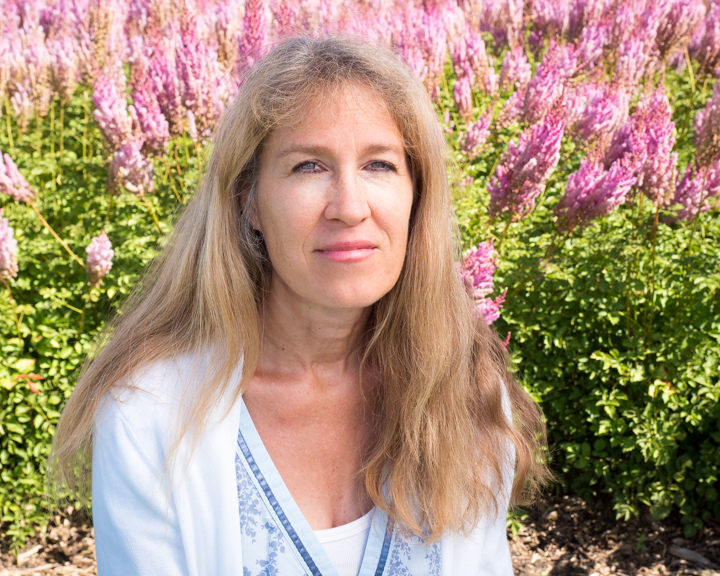
What’s your supervision style? My supervision style is to work as a detective with my intern to explore a client’s environments and experiences to better understand their behavior through the lens of how their mind interprets events and how their nervous system protects itself. I want a clinician to find the style that best suits them and can best meet the needs of the clientele they will be serving.
What is your favorite thing about supervising? I enjoy teaching and have a ton of articles, books and resources that I enjoy sharing. I love learning and love when others are learning and learning together keeps me inspired.
Tell us about your clinical experience: I began my work in this field in the largest residential treatment center in Minnesota. While securing my MFT licensure, I worked for a 5-county consortium seeing clients of all ages and diagnoses both outpatient, in home, and for the prison. I lead groups for various mental health issues and considered myself very fortunate to have had the comprehensive experience so early on in my career. I worked for a couple years in a privately run facility that performed 6-month assessments for complex cases of children and teens from both private and state referrals. I worked as a family therapist with a team composed of a medical doctor, a neuropsychologist, a psychiatrist, a social worker and a behavioral team. IZ did supervision while I raised my son until school age and then began my career with FamilyMeans.
I prefer to take clients with complex trauma. I currently work with individuals, couples, families, adolescents, and teens. I have seen a majority of adolescents with suicidal and self-harm patterns in the past 15 years. Most common to all my clientele are feelings of anxiety. I currently am seeing more adults of all ages. Lately factors outside a person’s control, such as the pandemic fears and isolation and financial strain are contributing to clients distress.
I have studied and trained the most on the topic of trauma and attachment needs and disruptions. I enjoy the work of Bowlby, Daniel Siegel, Peter Levine, and Bessel Van Der Kolk. I have training in EMDR and use this modality frequently in sessions. I also trained in Ericksonian hypnotherapy through the U of M medical school for 15 years. I find understanding developmental stages of growth and the attachment needs specific to each client helpful when assessing patterns of behavior that prevent healthy functioning.
Tina Dince, MSW, LICSW

What’s your supervision style? I encourage supervisees to work on developing their professional self while maintaining a sense of personal self as well. I enjoy collaborating with supervisees to help them find the answers and solutions that work best for them, giving guidance and feedback as needed, while encouraging them to focus on building their own competence and independence to become therapists. I focus on recognizing how clients may affect us as therapists and as people in general, and how our interactions can be meaningful, helpful, and supportive. I help supervisees work on developing the clinical skills and finding/ building on therapy modalities that work best for them while encouraging them to explore many modalities to see which ones may be the best fit.
What is your favorite thing about supervising? I enjoy watching the journey of growth and discovery as new therapists and interns develop their professional therapy styles with their clients. I enjoy helping to work with new therapists and interns with feeling uncomfortable to becoming much more confident. I am a life-long learner and there is always something new I learn from interns and new therapists!
Tell us about your clinical experience: I have experience working with clients with dual diagnoses (substance/alcohol use and mental health issues), severe and persistent mental illnesses such as Schizophrenia and Bipolar Disorder, personality disorders, anxiety, depression, grief/loss, suicidal ideation/self-harm, etc. I have experience facilitating and co-facilitating various groups, including DBT groups. I focus primarily on Cognitive Behavior Therapy and include elements of Dialectical Behavior Therapy (DBT), strengths-based approach, and solution-focused therapy as applicable. I currently work with adolescents and adults for individual, family, or couples therapy at our Stillwater office.